


Getting found online matters.
If you’re responsible for your company website, even unofficially, you’ve probably thought at least one of these things:
- “We need to rank higher on Google.”
- “We need more keywords on this page.”
- “Can we just write a blog that will boost our SEO?”
Somewhere along the way, SEO stopped being a helpful set of signposts for website visitors and researchers and became this mysterious thing that people don’t fully understand. When things get confusing, we either ignore them completely or contort our copy until it reads like it’s been written by a robot with a thesaurus. Cue AI!
But I want to reassure you that there is a middle ground…
You can absolutely write content for your website that helps you show up in search without butchering your tone of voice or boring visitors to tears. Let’s walk through what SEO actually is, the bits that matter, and how to weave it into your content in a way that still feels like you.
What SEO really is (and why it matters) SEO stands for Search Engine Optimisation. It’s simply the process of helping search engines understand what your pages are about so the right people can find you via free, organic search results.
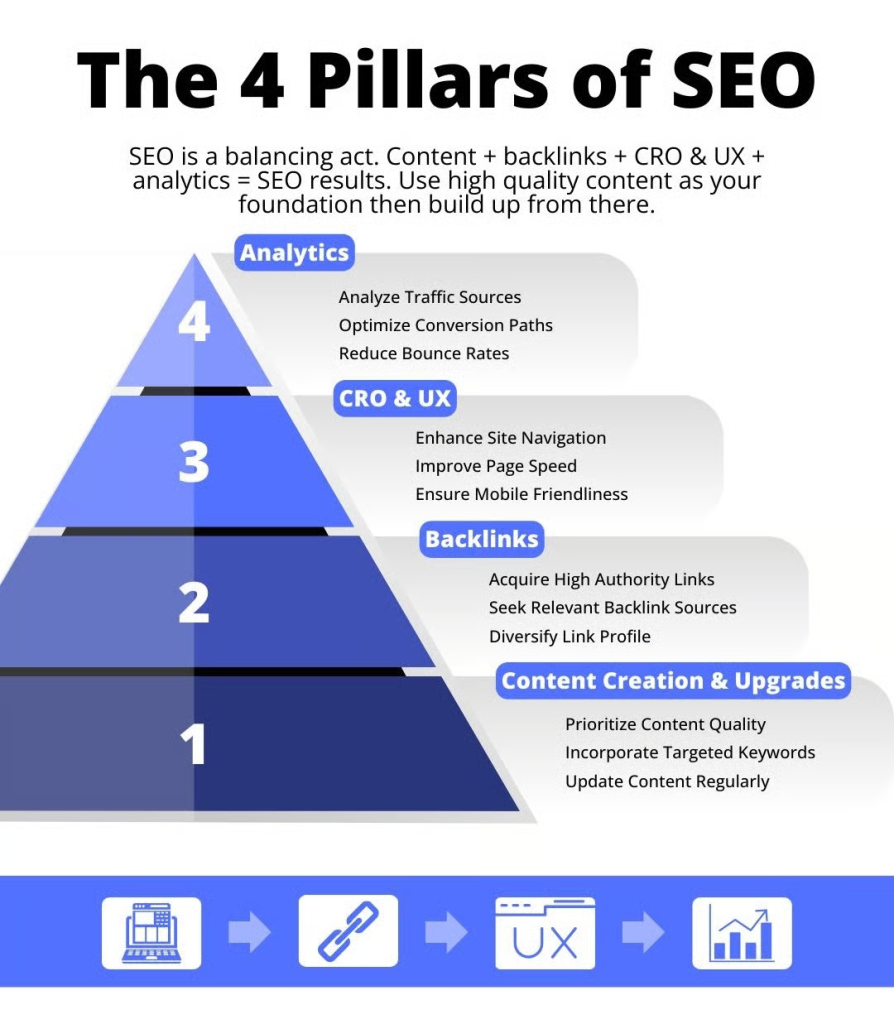
When someone Googles ‘Jersey employment law advice’ or ‘Guernsey bookkeeping for small businesses’, Google has to decide which websites to show them first. A good SEO set‑up increases the chances that your site appears on that all‑important first page, ideally in the top few results.
This matters because most people will not lovingly scroll to page three to hunt you down. They’ll click on what they see first, scan a couple of sites, and make a decision. If you’re invisible in search, you’re effectively missing from that decision‑making moment. And losing out on potential sales.
So yes, SEO matters. But it’s not magic, and it’s not the only thing that matters.
The three pillars: technical, on‑page and off‑page (in plain English)
Every decent SEO conversation comes back to three core pillars. You don’t need to be a developer to grasp them; you just need to know where they fit.
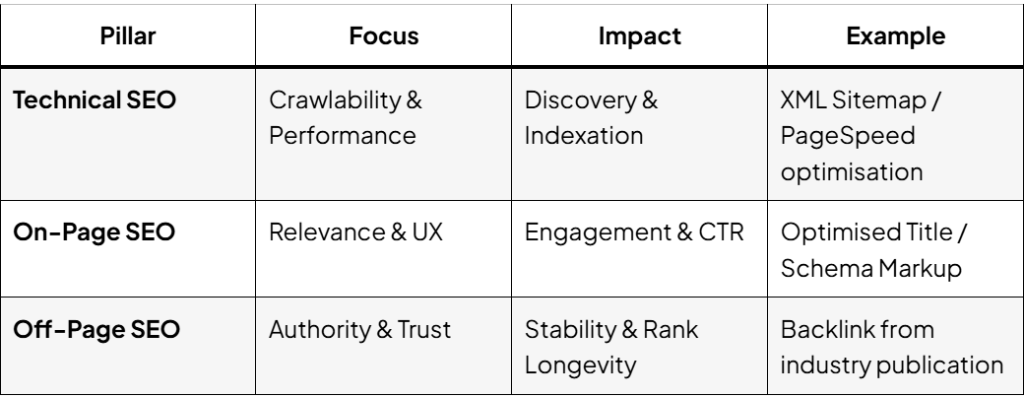
Technical optimisation is about how your website is built and how well it runs. Think speed, loading and accessibility. Does your site load quickly on mobile? Are there broken links everywhere? Do you have an XML sitemap so search engines can crawl your pages efficiently?
Not sure about the last one? An XML sitemap is simply a file that helps search engines find and understand the pages on your website. Many websites have one automatically generated. To see whether yours does, try adding /sitemap.xml to the end of your web address, e.g. https://www.twittwooyou.com/sitemap.xml
If your site is painfully slow or full of errors, no amount of clever content will fully compensate.
On‑page optimisation is what most people think of when they hear ‘SEO’. It’s everything on the page itself: your headings, copy, images, meta descriptions and internal links. It’s where you make sure the words you use match the words people are actually typing into Google, and that the page is genuinely helpful when they land.
Off‑page optimisation is everything that happens elsewhere that points back to your site: backlinks from other sites, mentions of your brand, people sharing your content, even your email newsletters driving people to your articles. So, wherever you can seek out other people who might include a link to your website on their website.
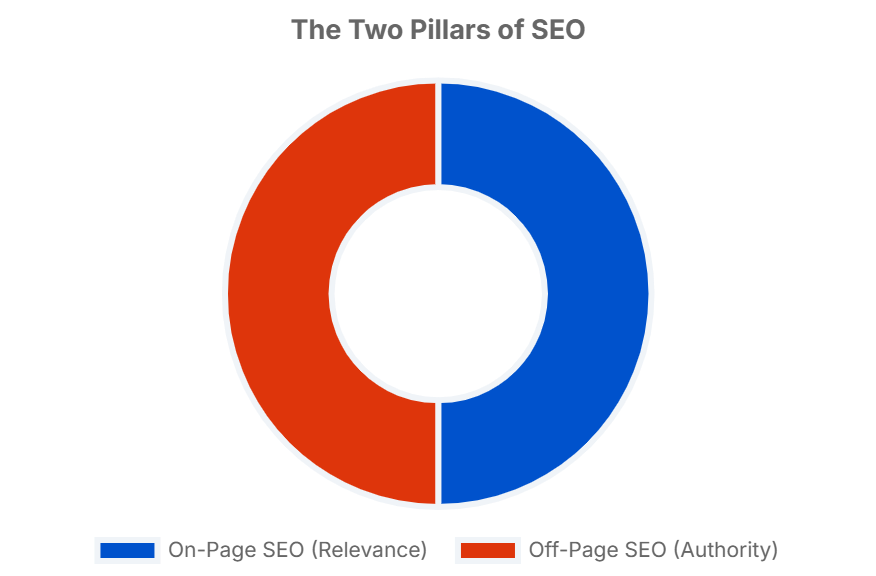
Search engines see these as reputation signals. Thinking back to backlinks, if other decent sites send people to you, you’re probably doing something right.
For most business owners and in‑house marketers, on‑page and off‑page are where you can have the biggest impact. The tech bits you can tackle periodically with your web person or agency.
Content is still the engine (but stop writing for Google first)
Here’s the controversial bit: you can absolutely overdo SEO.
If you’ve ever read a page that repeats the same phrase ten times (‘Jersey tax adviser for Jersey tax advice and Jersey tax planning in Jersey’), you’ll realise they are writing page content for SEO’s sake and not for the user.
Google’s algorithm is secret, but we know this much: it rewards content that is relevant, clear and useful to the searcher. If you write solely to tick SEO boxes, you often end up with dry, repetitive copy that nobody actually wants to read. And if humans don’t like it, that will eventually show up in your metrics. Think bounce rate (the time it takes someone to arrive and then leave your website), time on page, and volume of enquiries.
A better approach is:
- Start by writing for the human who’s landed on that page.
- Make it as clear, compelling and helpful as you can.
- Then go back and sensibly weave in the phrases they might have searched for.
For example, imagine you run a local accounting firm, and you’re writing a page about your services for small businesses. You know, people might Google ‘Jersey small business accountant’ or ‘bookkeeping for sole traders’.
You don’t need to hammer those exact phrases in every sentence. Instead, you might write something like: ‘We help Jersey‑based sole traders and small businesses stay on top of their accounts, from monthly bookkeeping to year‑end tax returns.’
You’ve naturally hit ‘Jersey’, ‘sole traders’, ‘small businesses’, ‘bookkeeping’ and ‘tax returns’ without sounding like a robot.
A few on‑page tips that don’t kill your voice
When you’ve written your draft, run through this simple checklist:
- Does your page title clearly reflect what’s on the page and include a key phrase where it makes sense?
- Are your main headings (H1, H2) descriptive, not vague (‘Our services’ tells Google very little; ‘Corporate and funds services’ is better)?
- Have you used related phrases naturally in the copy, as you’d say them out loud?
- Are you linking to other relevant pages on your own site that help the reader (for example, from a blog post to a service page)?
None of this requires you to sound less like you. It just requires a second pass with your ‘searcher’s hat’ on.
Off‑page: make it easy for others to send people your way
Off‑page SEO can feel mysterious, but much of it is simply about being useful and visible.
If you write a helpful guide to, say, ‘Top 10 questions to ask before choosing a trustee’, other local firms, industry bodies or media outlets might link to it in their own content. If you contribute an article to a local publication or speak at an event, ask for a link back to the relevant page on your site.
Those backlinks and mentions act like votes of confidence in Google’s eyes and, more importantly, they send real humans your way.
The bottom line? SEO is important, but it shouldn’t define your website’s content, look and feel.
Your job is to make life easier for the person who’s just typed a problem into Google and landed on your site. If you can answer their question clearly, show that you understand their world, and gently signal to search engines what your page is about, you’re already ahead of most.