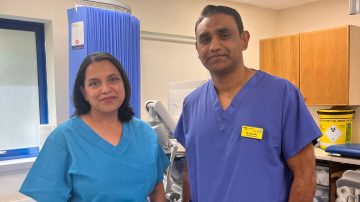


The Medical Specialist Group has strengthened its anaesthesia team with the appointment of a new Consultant anaesthetist, Dr Awais Ahmed.
He brings expertise for patients in Guernsey who will benefit from a broader range of safer surgical options, specialising in intensive care and regional anaesthetics which involves numbing specific parts of the body. This supports better and faster recovery, particularly for higher-risk patients, and reduces reliance on general anaesthetics which puts the whole brain to sleep and can be risky for some patients.
Dr Ahmed trained in anaesthesia and intensive care medicine across Ireland and the UK, where he completed both the Membership and Fellowship examinations in anaesthesia.
Through this expertise, Dr Ahmed has contributed to improvements in peri-operative pain management, reduced use of opioids (strong prescription pain medications), enhanced recovery after surgery, and better outcomes for critically ill patients through evidence-based intensive care practice. He is a significant addition to MSG’s clinical services and expertise.
Dr Michelle Le Cheminant, Chair of MSG and an anaesthetist herself, said: “We are very fortunate to have recruited a doctor of Dr Ahmed’s calibre. He brings extensive skills and experience that will greatly benefit our community, and I am confident patients will value the high standard of care he will bring to our team.”
Dr Ahmed said: “I was attracted to working in Guernsey because I enjoy being part of close-knit communities. I also appreciate the island’s fresh sea air and the relaxed, calm and peaceful lifestyle it offers.
“The combination of my formal intensive care training at specialist centres in the UK and my advanced fellowship in upper limb regional anaesthesia enables me to provide safe peri-operative care for patients who may be considered higher risk for surgery. My aim at MSG is to provide compassionate and safe care for patients undergoing surgery, while also supporting families and relatives during difficult times when their loved ones require intensive care.”