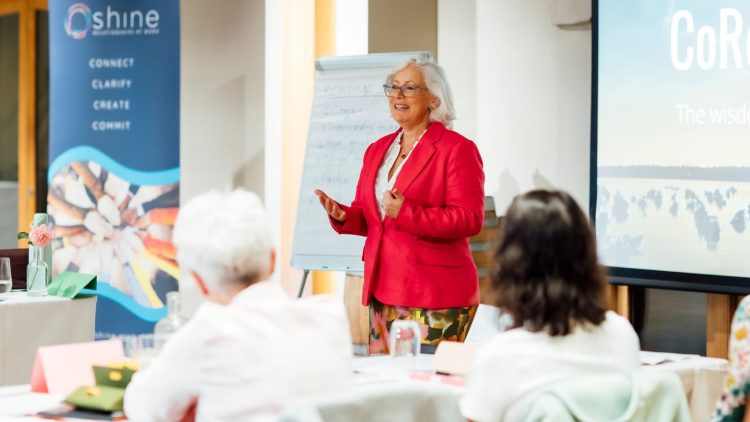
Healthy workplace culture means having the courage to hear the alternative view.
At the forefront of the news in Jersey over the past month have been troubling questions around the consequences of whistleblowing, workplace cultures, leadership and accountability. Beyond Jersey, too, there have been shocking stories of people apparently knowing that something was seriously wrong, but failing to raise their concerns or act upon them.
So why is it still so difficult for leaders to welcome dissent? What is the threat that makes it so hard to create sufficient trust for people to speak up? I’m thinking beyond the headline-grabbing events, because it starts with smaller daily interactions in meetings and teams, which can affect the entire ecosystem of an organisational culture.
How can leaders retain the authority to make clear decisions whilst allowing different views to be heard?
Let’s imagine a meeting where a new initiative is being introduced. Most are enthusiastic, but one person raises concerns about workload and capacity. The majority disagree, the leader makes the decision, and everyone moves on. Except perhaps they don’t. That minority view hasn’t necessarily gone away, and others may have shared it but felt unable to speak up. What happens when people repeatedly experience this and begin to think that challenging decisions simply isn’t worth it? What if that minority view contained some important grain of wisdom?
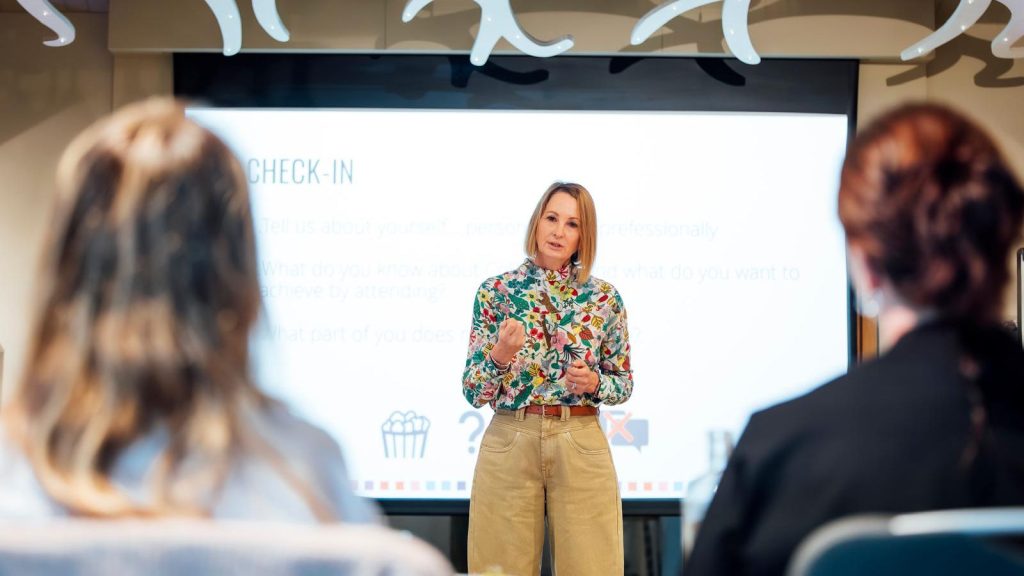
Trust, psychological safety and conflict
Harvard professor Amy Edmondson’s 1999 study, Psychological Safety and Learning Behavior in Work Teams, defined psychological safety as a shared belief that a team is safe for interpersonal risk-taking. Her research connected psychological safety with learning behaviours such as asking questions, seeking feedback, discussing mistakes and experimenting with new approaches.
Psychological safety is sometimes misunderstood as creating an environment which is conflict-free and in which everyone feels comfortable, but this is far from it. Conflict, differences of opinion and resistance will always be somewhere under the surface with any group. What matters is whether people believe they can participate without being marginalised or punished for speaking up.
In The Five Dysfunctions of a Team (2002), Patrick Lencioni offers a model identifying an absence of trust as the primary cause of team dysfunction, leading to fear of conflict, lack of commitment, avoidance of accountability and ultimately failure to focus on collective goals. He encourages leaders to model vulnerability by admitting mistakes, asking for help and acknowledging weaker areas. He describes the artificial harmony that develops when teams avoid difficult conversations. Meetings might appear cordial and productive, but important disagreements remain unresolved.
Both raise an interesting challenge for leaders. How can they see dissent as a valuable challenge rather than an inconvenient slowing down of decision-making, or at worst, insubordination?
Resistance contains wisdom
At Shine, much of our work concerns relationships, group dynamics and the tensions that arise when people work together. We use CoResolve, a practical methodology rooted in Lewis Deep Democracy, to help leaders recognise resistance and work constructively with disagreement.
Lewis Deep Democracy emerged in South Africa during the 1990s, developed by Myrna and Greg Lewis and influenced by Arnold Mindell’s Process-Oriented Psychology. The approach recognises that minority perspectives may contain valuable information a group has overlooked.
At Shine, much of our work concerns relationships, group dynamics and the tensions that arise when people work together.
The approach actively seeks alternative views rather than waiting for people to volunteer them. Once a majority decision has been reached, it asks what those who disagreed need to support moving forward. Important insights can then be incorporated without requiring unanimity or undermining the leader’s responsibility to decide.
CoResolve describes a ‘line of resistance’, where resistance begins subtly, with sarcastic comments, jokes, withdrawn contributions or reluctance to engage. Left unattended, it can develop into procrastination, entrenched opposition or, in extreme cases, a breakdown in relationships.
Practising what we preach
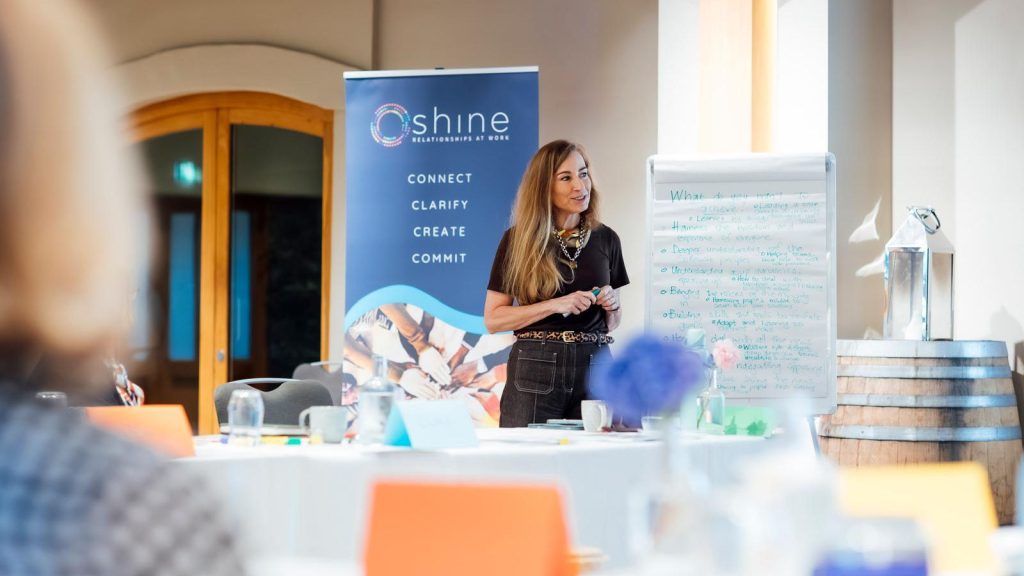
At a recent CoResolve workshop in Jersey, Shine facilitators Cilette Harris and Anny Bodenstein worked with 12 leaders to explore these ideas and practise the tools.
In an interview afterwards, Cilette acknowledged an opportunity to explore resistance in that very room, when a participant challenged an element of the programme. She described noticing her immediate impulse to explain why the participant was wrong. She recognised that she had lost some of her neutrality and needed to gather herself before responding.
Even for Cilette, a highly experienced facilitator deeply committed to listening to difference, this was a reminder of precisely the challenge leaders face every day.
Most leaders wish to foster openness and inclusion, but it is natural to become defensive when someone questions something we care about. It can feel like personal criticism. It takes work, technique, self-awareness and discipline to override that defensiveness. And of course, it takes time, which most leaders feel is quite thin on the ground.
Anny emphasised the importance of leadership modelling. Organisations need leaders prepared to question their assumptions, acknowledge that they may not have all the answers and demonstrate a willingness to learn.
Culture begins in everyday interactions
Workplace culture is created and reinforced through countless everyday interactions. What happens when someone admits a mistake? How does a manager respond to unwelcome feedback? Does a dissenting colleague become labelled as troublesome?
People quickly learn what is safe to say and what is better left unsaid.
Where serious misconduct or safety concerns arise, organisations need effective reporting mechanisms, independent scrutiny and proper accountability. Some environments may be so psychologically unsafe that more fundamental work is needed before people can engage openly. But even seemingly cordial and willing groups benefit from regular ‘relationship housekeeping’.
Jersey is a small community where professional relationships, reputation and personal connections frequently overlap. This can make challenging authority particularly difficult.
I think the question I’d like to ask leaders is this one. When someone says something you don’t really want to hear, especially when you’re under severe time pressure and very sure of the decision you want to make, do you genuinely create the space to understand their concern? Do you actually listen, or are you already formulating your response while they are speaking?
The answer may tell you something about the culture you are inadvertently creating.
 Nicki Kennedy (Main picture) is a Partner at Shine, a leadership and organisational development consultancy specialising in healthy workplace relationships. She works alongside fellow Partner Anny Bodenstein, a chartered coaching psychologist who established Shine in Jersey in 2021. Both are executive coaches based in Jersey, helping leaders and organisations navigate conflict and develop healthier workplace cultures. Founded in South Africa in 2017, Shine operates internationally through a network of more than 25 associates.