

Guernsey is well established as a leading offshore finance centre with a thriving funds industry, underpinned by the island’s political stability, tax neutrality and supportive regulatory environment.
While the formation and expansion of investment funds often attract significant focus, equal attention should be given to the managed wind down of funds and the liquidation process, as the end of a fund’s life has a certain inevitability. So, although it may seem counterintuitive, the consideration of a fund’s exit strategy at the inception of, and during its life, is important as it will help ensure that appropriate mechanisms are in place for an orderly wind-up.
This article will explore the benefits of appointing an independent liquidator to facilitate the liquidation process, to help protect investors and simplify the wind down process.
The role of the independent liquidator
For both fund managers and investors, liquidation often represents the formal completion of a fund’s lifecycle. This process extends beyond mere closure, emphasising responsibility, transparency, and the optimisation of stakeholder value.
Whilst many fund administrators may choose to undertake liquidations in house, engaging an independent liquidator can be beneficial: by leveraging their expertise and industry contacts, they can help protect investors and administrators alike, by providing independent review and increasing transparency, reducing or hiving down costs, maximising asset realisation values, and providing advice on the wind down strategy and timetable. This also has the added advantage of freeing up fund administrator time. Furthermore, independent liquidators can facilitate liaison with the regulator and offer independent reviews of closing NAVs and contingent liabilities, and assist administrators, managers and directors in ensuring a smooth and compliant process.
Understanding solvent liquidations in Guernsey
A Guernsey company can be voluntarily wound up through the passing of a special resolution passed by at least 75% of its shareholders. Liquidation, in the context of a solvent fund, occurs when a fund meets the balance sheet and cash flow test (as set out in section 527 of the Guernsey Company Law, 2008) and wishes to wind up its affairs in an orderly manner.
This decision often follows the fund achieving its investment objectives, a planned exit, or a strategic shift in the market environment. Solvent liquidations are proactive, with the aim of returning capital to investors efficiently and in accordance with the fund’s governing documents.
Managing liquidity and complex assets
A key advantage of appointing a professional, independent liquidator in Guernsey is their experience in managing both liquid and illiquid asset positions. While some fund assets, such as listed securities, can be readily sold, others may face liquidity challenges. Real estate, private equity and certain debt instruments often require specialist handling to achieve an optimal realisable value and avoid fire-sale discounts.
Professional, independent liquidators bring a wealth of expertise and contacts, employing strategies such as staggered sales, negotiated settlements, or in specie distributions to investors or SPVs where appropriate. Their independence and fiduciary duty ensure that all investors are treated equitably, and that the realisation of assets is conducted with diligence and patience; this is particularly valuable where asset markets are volatile or where the fund holds niche positions.
Pursuant to Company Law and the Insolvency Rules in Guernsey, liquidators also possess the authority to disclaim onerous assets, such as when recovery and realisation expenses exceed the expected realisation value. This measured approach ensures the liquidation can be concluded in a timely and cost-effective manner.
Communication with the Guernsey Financial Services Commission
The suspended funds regime in Guernsey involves the suspension of the Guernsey Financial Services Commission’s authorisation or registration of a Guernsey regulated fund when it reaches the end of its term or enters voluntary liquidation. Accordingly, communication with the Guernsey Financial Services Commission (GFSC) throughout the liquidation process is vital. A key duty of the liquidator is to coordinate closely with the GFSC and the fund’s designated administrator concerning the status of the fund’s liquidation until such time as the fund’s authorisation or registration is able to be surrendered.
Professional liquidators, as Guernsey Prescribed Businesses, also have the responsibility to consider financial crime compliance during liquidations – as the requirements of the GFSC’s AML/CFT Handbook apply throughout any period of suspension of a fund’s authorisation or registration.
Distributions: Fairness and adherence to fund founding documents
The distribution of surplus assets to investors is an important aspect of the liquidator’s role. Distributions must be made strictly in accordance with the fund’s offering and constitutional documents. This involves calculating net return per share, accounting for different currencies and share classes, and managing creditor claims and liquidation reserves.
Liquidators must ensure accuracy and transparency throughout this process. Interim distributions may be required during the course of a liquidation, allowing liquidity to be returned to investors in a timely manner. For interim distributions the liquidator must ensure to retain sufficient liquidation reserves to cover actual or potential future liabilities.
Conclusion
The end of a fund’s life has a certain inevitability, so the way in which the fund is wound down and liquidated is an important consideration for all stakeholders. The benefits of appointing a professional independent liquidator, to facilitate the liquidation process, are clear – assisting fund administrators, adding transparency and experience, assisting to unlock residual value, protecting investors and navigating regulatory requirements.
Why KPMG?
KPMG in the Crown Dependencies is a leading provider of professional services, delivering Audit, Tax, and Advisory expertise across key industry sectors. We are a locally owned firm and part of the KPMG Islands Group, which spans 12 jurisdictions and includes over 3,400 professionals. Our people are our greatest asset. With a wide range of qualifications and experience, they bring the quality, insight, and added value our clients expect. We take a global, multidisciplinary approach to solving complex business challenges, crossing professional disciplines, industry sectors, and borders.
Our local Guernsey Restructuring and Insolvency team provides a wide range of services to businesses, creditors and lenders. With extensive experience in the funds industry, we provide support both as liquidators and through regulatory, transactional and taxation expertise. With a team operating across the Isle of Man, Guernsey, and Jersey, KPMG’s cross-jurisdictional professionals are adept at crafting tailored solutions that address challenges and deliver enduring value for stakeholders.
 If you would like to know more about how KPMG’s Restructuring team can assist, please contact Janine on [email protected] or visit the KPMG website.
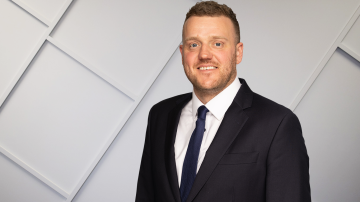
Main picture: Janine Schofield