
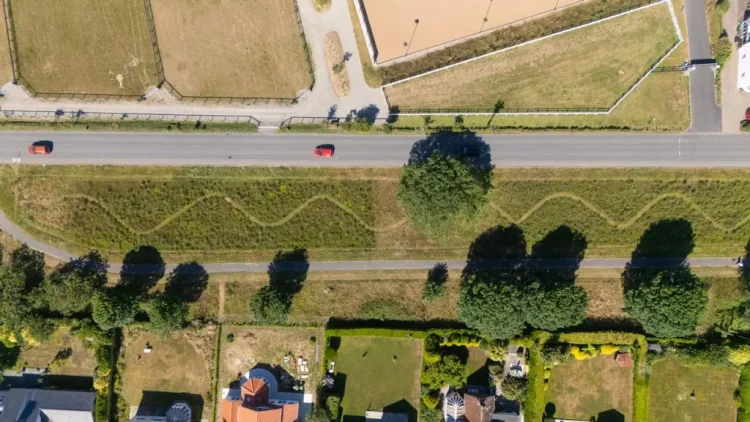
The Pollinator Project has shared the results of its recent public consultation on the future of Fort Field, the area of grassland next to Fort Rd.
At the event, islanders were invited to comment on four landscape options and proposals to enhance the scrubby area next to the wildflower meadow. The consultation followed growing public interest in how semi-wild spaces can be better managed to balance nature, access and at the same time look good.
A total of 95 questionnaires were completed, along with 86 written comments. An overwhelming 74% of respondents supported continuing to manage the native wildflower meadow. The next most popular option, backed by 14%, was treating the area as mown grass. More than half of respondents favoured introducing native hedging to the scrub area, while nearly half supported the creation of an avenue of native cherry trees to improve structure and seasonal interest.
Gordon Steele, Chair of The Pollinator Project, said: “The strength of public support has been hugely encouraging. Islanders clearly recognise the value of spaces that support wildlife as well as people. We were especially pleased at how constructive the suggestions were and that will help us shape the site for the long term. Of course this isn’t a one-off exercise; consult and forget! We are always going to be open to feedback in person, or on-line. Over 70 members of the public have joined our Friends of Fort Field group, and both neighbours and volunteers have joined us in cutting and raking the meadow already”.
Gordon added: “This isn’t just about one field. It’s about showing how small changes in land management can deliver real gains for nature across the island and still look good. We’ve surveyed the soil, the plants and animals in the area and will monitor changes each year. Fort Field can become a model that any landowner can follow.
“I must also thank other organisations for their help. Experts from La Societe Bat and Botany sections, and Trees for Life have been involved and the Soil Farm has been taking the cut grass. And we’ve had really good support from the States’ team at Agriculture, Countryside and Land Management Services.”
Picture Credit: SkyWave