

You’ve probably noticed that the word ‘kindness’ is appearing more often in business circles lately.
From business schools and consultants to respected publications like Harvard Business Review and MIT, there’s a growing shift in how leadership is being understood.
In todays Wellbeing at Work feature, Leadership expert Mark Doughty of the Global Kindness Institute explores why kindness is emerging as a powerful leadership strategy, reshaping workplaces and redefining what it means to lead effectively.
It’s not just a trend; it feels like the beginning of a real paradigm shift. A new way of leading that fits the demands of this third millennium: more human, more purposeful, and far more powerful than the old models of control or perceived weaker models of servant and authentic leadership.
That said, kindness as a leadership approach isn’t new to us. We’ve seen it before, maybe not often, but enough to know how powerful it can be. Think back over your career. There were leaders I am sure who stood out. The ones you naturally gravitated toward. They had something special, a quiet confidence, a generosity of spirit, a way of making the ordinary feel extraordinary. You respected them deeply. Not just because they were warm or compassionate, but because they challenged the status quo when it mattered. They made you want to show up better. You probably had more energy, more drive, more belief in what you were part of. There was momentum. You could feel it.
Even when things got tough, they made it seem possible. They didn’t avoid hard conversations; they leaned into them. They held you to account, but always with care and clarity. They had purpose. Direction. Something that drew you in. They weren’t always the loudest or most charismatic, but they knew their stuff, and you wanted more of it. More of them. Because they made you better. They didn’t lead with ego. They led with presence. With care. They made you feel seen, safe, and capable. That’s the kind of leadership we remember. And I would propose it’s exactly what we need more of today.
I know from my own recent conversations many leaders worry that showing kindness will undermine their authority, dilute their decision-making, or make them look like a pushover. The truth is the complete opposite. When used well, kindness is one of the most powerful tools any leader can use, and in today’s volatile, competitive, and uncertain world, it’s fast becoming a genuine commercial advantage.
Kindness isn’t just about being nice, and it’s never a weakness. Instead, it’s the courage to face what’s broken, and the clarity to do so without breaking people. It’s the kind of leadership that shifts culture, builds momentum, and inspires people to show up better, not out of obligation, but belief.
Kindness doesn’t mean avoiding hard decisions, tolerating poor performance, or lowering standards. It means leading with integrity, even when it’s tough. A kind leader doesn’t sugarcoat the truth, but they deliver it with respect. They don’t let people guess where they stand, but they frame feedback in a way that helps people grow. They don’t duck accountability conversations, because they know clarity is one of the kindest things you can give someone. People would rather hear a hard truth than be left in the dark, and for me that’s kindness in action.
In the knowledge economy, where creativity, collaboration, and innovation are currency, fear-driven leadership kills performance. And this is the paradox most leaders miss: the more you rely on fear to establish authority, the less authority you have. The true definition of being in control is your ability (as a leader) to let go! Leaders need to learn how to let go of micromanagement, ego, and the need to be the smartest person in the room. Great leaders don’t cling to power; they lift others up. They know real influence isn’t built on fear, but trust. That’s the kind of leadership that lasts, that changes lives, and that people choose to follow.
Kindness pays forward too. Multiple recent studies have shown that organisations with cultures of trust and respect outperform their competitors. In my recent research for my book, five leaders notably come to mind, namely: Satya Nadella (Microsoft), Mary Barra (General Motors), Leena Nair (Chanel), Paul Polman (Unilever), and Indra Nooyi (PepsiCo). They each brought distinct, diverse backgrounds to the table. While no one claimed perfection, they all have demonstrated a notably different leadership approach: one that is embedded in or aligned with a kinder, more human-centred way of leading. Whether through cultural transformation, stakeholder stewardship, or value-driven strategy, they’ve shown that kindness in leadership is not a weakness; they’re strategic imperatives that impact the bottom line.
However, there is a weakness in hiding behind authority, silencing dissent, or avoiding difficult conversations. After all, if we look at the direction leadership is heading. Younger generations entering the workforce have different expectations. They are less willing to tolerate toxic bosses, more demanding of purpose-driven leadership, and quicker to leave when they don’t feel valued. Therefore, the leaders who succeed in the next decade will be those who understand that kindness is the non-negotiable way to lead.
Next time someone questions kindness is a weakness, just smile, because you know better from experience, you know first-hand that kindness builds strength. It lifts you, your team, and your business. And in a fast-changing world, it might be the smartest way to lead.
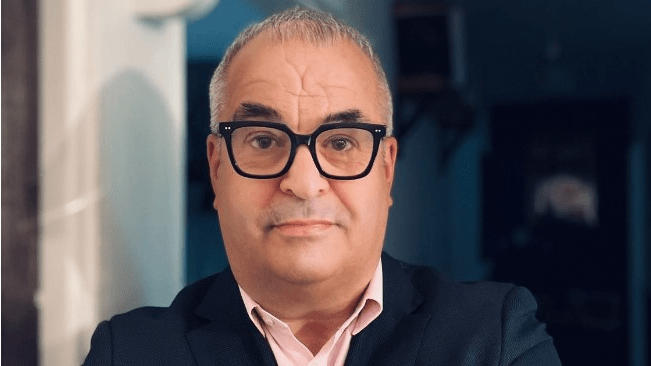
Mark Doughty, M.Ed., M.A. (main picture), Mark brings over 25 years of leadership and organisational development expertise, with a proven track record across many diverse sectors and several top-tier global brands. In April 2025, Mark launched The Global Kindness Institute, a ‘think tank’ focused on redefining leadership excellence through the power of Kindness. Mark can be contacted at [email protected]