

Many of the world’s largest businesses do not have climate transition plans that are robust enough to support global efforts to cap rising temperatures.
While some progress is being made more needs to be done to guard against the biggest environmental risks, according to the latest EY Global Climate Action Barometer.
The report examines the views of more than 850 companies across 50 countries and 13 sectors, that have been identified as climate leaders and assesses the extent to which they are taking action to achieve vital climate goals, and whether they are disclosing their actions in climate reporting. It looks at the steps they are taking and where they are falling short.
The findings reveal that, while two-thirds of businesses (64%) have ‘net-zero’ transition plans in place, and only one in ten (12%) have made strong progress in developing or disclosing plans, there are gaps that threaten to undermine progress.
Less than half (48%) of organisations have kept their targets in line with scientific guidance on how to mitigate against the worst effects of global warming.
Almost two-thirds (63%) of companies with net-zero targets rely on carbon credits, highlighting a dependence on offsetting their emissions rather than actively decarbonising. This use of carbon credits is especially high in financial services (78%) and transportation (69%) sectors, which are struggling to decarbonise.
The research also shows that one-third (34%) of businesses interviewed have restated their climate targets, citing factors such as reduced funding or regulatory uncertainty. Of these restatements, more than two-fifths (44%) were weakened, either by being less ambitious or because of delayed timelines.
According to the Barometer, most companies (68%) have assessed both the transitional risks and physical risks they face related to climate change, including those faced as they move toward decarbonisation and those that arise directly from climate-related events. However, less than a fifth (17%) report on the financial impact of these risks, leaving their exposure to climate change is not clear or quantifiable.
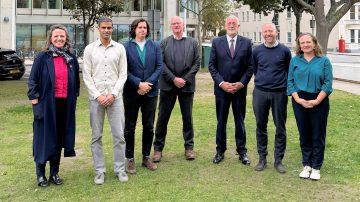
Peter Miller (pictured), an Assurance Partner at EY in Guernsey, explained: “The Barometer makes it clear that proactive climate action is no longer optional and is a strategic opportunity. For the Channel Islands, where financial services dominate, embedding climate risk management and sustainability into investment strategies is critical to maintaining global competitiveness. By turning ambition into action, we can position Guernsey as a trusted hub for climate-conscious capital and play a meaningful role in the global transition to net zero.
“Guernsey has been a leader in developing and implementing sustainable finance and climate change policies, products and services and is supported by a robust regulatory framework. This was evident through the GFSC’s Guernsey Green Fund, the world’s first green fund. It’s crucial that businesses utilise these frameworks to tackle climate risks and ensure all their efforts are disclosed and reported effectively to build trust with their clients and investors.”
The vast majority of the leading businesses that took part in the research (92%) state they have fully analysed the likely impact of physical risks on their operations. However, only two-fifths (44%) report having measures in place that will help them adapt to manage these risks.
The research also points to a lack of effective governance across many organisations, potentially undermining their efforts to take action on climate change. For example, just 8% of companies have board oversight over capital allocation, 21% over target setting, and only 41% over progress monitoring.
Separate EY analysis, alongside the Barometer findings, highlights the cost of inaction for businesses. It shows that where organisations fail to address the risks of climate change, they could lose out on up to 15% of annual revenue.
Peter concluded: “The Barometer sets out a series of recommendations to help businesses plan and execute climate transition. Businesses are advised to embed climate goals into strategy, implement clear transition plans, risk assessments and governance processes; and explore the opportunities offered by AI.
“For any business to remain resilient and ensure continuity in the face of climate change, long-term planning is essential. This means implementing actionable transition plans that demonstrate proactive risk management and adapting strategies as we move toward a low-carbon economy.”