
The winners of the 2025 Cover Crop Competition have been announced, celebrating Jersey’s potato growers and shining a spotlight on the crucial role of cover crops in building a healthier, more resilient land.
Now in its second year, the annual competition run by the Jersey Royal Company, part of the Albert Bartlett family, recognises the farmers who are leading the way in sustainable agriculture. Their efforts nurture the environment between potato growing seasons, helping to enhance soil structure, support pollinator habitats and boost biodiversity across the island.
Cover crops play an essential role in sustainable, regenerative farming by protecting and enriching the soil between harvesting and replanting seasons. They help retain nutrients, prevent erosion, and offer vital food sources for pollinators and birds during quieter months. For Jersey Royal growers, they are an integral part of the cycle that keeps the island’s landscape thriving year after year.
Category Winners – Cover Crop Competition 2025
- Best Pollinator Mix Field – Meleches Farms (Nick Mourant)
- Best Bird Mix Field – Fosse au Bois (Paul, Peter & Matt Carre)
- Best Soil Health Mix Field – Jersey Royal Company Blue Team (Adrian Baudains and Joe Martins)
- Best Visual – Master Farms (Peter, Phil and & Phil Jnr Le Maistre)
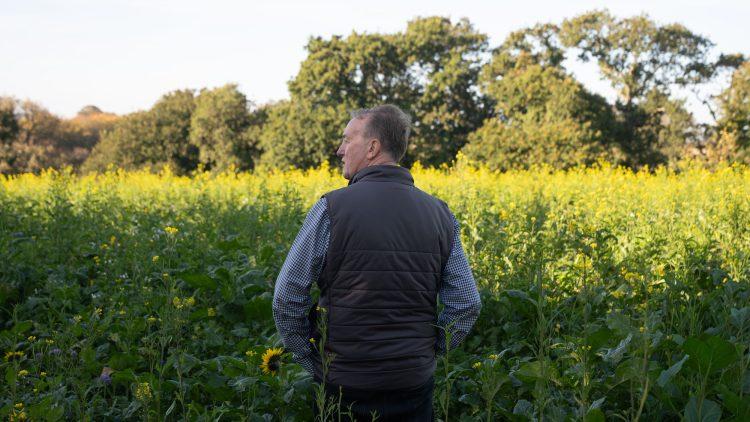
- Overall Winner 2025 – Meleches Farms (Nick Mourant)
This year’s competition was complemented by a research study led by Jess Sandle-Brownlie, which examined the environmental impacts of cover crops on pollinators, soil health and bird diversity across Jersey. Using a method called ‘FIT counts’ (Flower-Insect Timed counts), Jess and the team gathered data from 108 sample sites across 35 fields, planted with four different mixes – Bird, Pollinator, Soil, and Grass (control).
Key Findings
- Cover crops produced six times as many pollinators per count compared to grass control fields.
- All three mixes—Bird, Pollinator and Soil—showed equally positive effects on pollinator populations and diversity.
- Biodiversity and abundance both rose sharply wherever flowering crops were established, proving the collective ecological value of the approach.
- Floral diversity is essential: whether a mix is designed to benefit birds, pollinators or soil, the presence of flowering plants contributes to overall ecosystem health.
- Native cover crops of any type deliver tangible benefits to Jersey’s local biodiversity.
The study concluded that cover cropping is one of the simplest and most effective ways growers can promote wildlife diversity and soil regeneration while supporting the long-term sustainability of the island’s agriculture.