



A powerful new work by Jersey historian and author Ian Ronayne is set to shed fresh light on one of the Island’s most striking and least‑understood Occupation landmarks: the wooden‑cross war cemetery in Howard Davis Park.
Many Islanders have wandered through the park and paused at the distinctive wartime graves, wondering who lies there, how they came to Jersey and why they were buried in this unique location. On Sorrowful Tides, to be launched in Jersey on 25 September, uncovers the full story behind the men who rest there and the dramatic events that brought them to the Island’s shores.
The book traces the wartime service of HMS Charybdis, a Royal Navy cruiser with an impressive operational record. Launched in Birkenhead, she served extensively before undertaking her final mission in October 1943 to intercept an enemy merchant vessel off the north Brittany coast. Instead, Charybdis and the accompanying destroyer HMS Limbourne were ambushed and sunk by German torpedo boats, with more than 500 men lost in the English Channel.
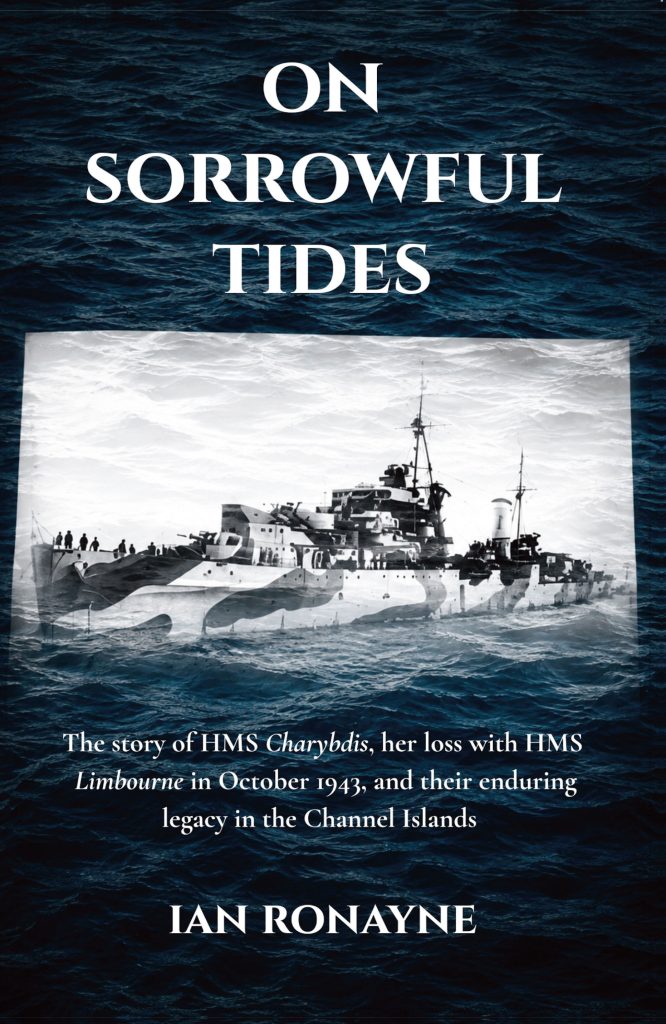 In the weeks that followed, 38 victims of the Battle of Sept Îles washed ashore around Jersey ‘on sorrowful tides’. With civilian cemeteries unable to accommodate so many burials, the Island’s authorities created a dedicated military plot in Howard Davis Park. The result was a solemn and enduring symbol of Jersey’s loyalty to Britain during the darkest days of occupation and separation.
Yet, as Mr Ronayne reveals, the tragedy extended far beyond the battlefield. German radio broadcasts falsely claimed that survivors had reached France, plunging hundreds of Royal Navy families into months of agonising uncertainty as they struggled to learn whether their loved ones were alive or dead.
It was this awful human side to the affair that really drew me to the story of HMS Charybdis and her loss with HMS Limbourne in 1943,” said Mr Ronayne. “I just can’t imagine what those families went through as they tried to establish the fate of a husband, father, brother or son.
“There was also a longstanding curiosity about the Howard Davis Park graves, with their unusual wooden markers and the former presence of American military personnel among the rows. If I, as a military historian, had questions about the graves, I felt sure others might be equally unaware of the context and uncertain about the identities of the men buried – or formally commemorated – there. I hope this book can answer those questions, tell an enthralling story, and stand as a tribute to all those who died more than 80 years ago, especially those who still lie under the care of Islanders.”