

As organisations continue to face rapid change, many are discovering that traditional project delivery approaches alone are no longer enough to create transformation that sticks.
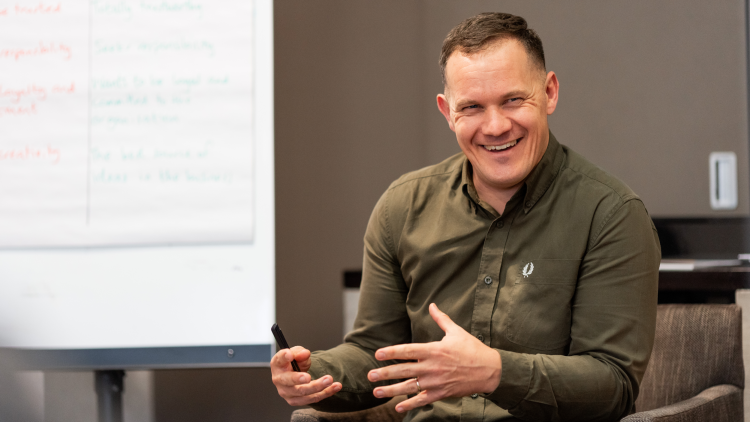
In this follow up to our recent Meet the Entrepreneur feature, Dave Crossland, Founder of Odyssea, expands on his earlier insights by exploring why Organisation Development matters, how it strengthens leadership and culture, and why it is essential for any business navigating meaningful change.
Think about the last major change project or transformation in your organisation. How was it managed? And more importantly – did it have the impact you hoped for?
Chances are, it began with good intentions and a familiar project methodology: clear milestones, structured plans, Gantt charts diligently updated, and delivery phases ticked off like clockwork. Perhaps you even had top-tier consultants supporting the technical or process work. On paper, everything made sense. On the surface, everything looked controlled.
Yet when you look back, you may notice gaps. You might wonder whether people were truly motivated and engaged. You may have sensed pockets of resistance, or lingering attachment to the previous way of working. And you may be asking yourself an uncomfortable but important question:
- Could more have been done to bring people with us?
This is where Organisation Development (OD) becomes not just helpful, but essential.
Why traditional project delivery isn’t enough
A well-structured project is valuable – but structure alone rarely transforms an organisation.
While a project plan assumes rational behaviour, stable systems, and linear stages, real organisations are far more complicated. People make sense of change differently. Teams interpret decisions through the lens of their history and relationships. And culture actively shapes whether implementation succeeds or quietly collapses.
Project managers excel at delivering outputs. But organisations need more than outputs – they need adoption, alignment, and sustained behavioural shift.
That is the work of OD.
Project managers and OD consultants: different roles, equal importance
Imagine your organisation as a car.
Project Managers (PMs) are the skilled mechanics. They tune the engine, replace parts, and ensure the vehicle functions reliably.
OD consultants, however, are the driving instructors. They help everyone understand where the car is heading, what the journey means, and how to move together without veering off the road or colliding with one another.
Both roles matter. But without OD, the human system – the beliefs, norms, fears, and motivations that determine how people behave – gets overlooked. And that’s where even the most perfectly engineered project can unravel.
What OD actually brings to the table
OD consultants deal in the invisible forces that make or break transformation. They ask the questions that don’t appear on Gantt charts but define whether a change sticks:
- How do people make sense of this change?
- What assumptions, tensions, or hopes sit beneath the surface?
- How aligned are leaders — truly, not just in the meeting minutes?
- What cultural patterns are helping or hindering progress?
- What is the organisation learning through this change?
Where PMs measure milestones, OD practitioners measure moments – the breakthroughs in dialogue, the shift in leadership behaviour, the growing trust across teams. Their value often becomes clear only in hindsight, especially when it’s missing.
Why OD matters more than ever
Executives understand project management. It is structured, measurable, and familiar. But OD provides what organisations increasingly need: the capacity to change, not just the ability to execute tasks.
Here’s why OD should be embedded in every major initiative:
1. OD builds a culture that outlasts the project
Projects end. Culture doesn’t.
OD helps shape the environment that future projects depend on. Instead of repeatedly ‘pushing’ change onto people, an OD-informed organisation becomes one where change is easier and more natural.
2. OD turns strategy into reality
Brilliant strategies often fail not because they’re wrong, but because the organisation isn’t aligned enough to deliver them.
OD bridges the gap between aspiration and behaviour by aligning structures, processes, and, crucially, mindsets.
3. OD reduces resistance and builds ownership
People don’t resist change – they resist feeling done to. OD emphasises participation, sense-making, and co-creation, giving people a stake in the transformation rather than placing them on the receiving end of it.
4. OD strengthens the social fabric of performance
Performance isn’t just about KPIs. It’s about relationships, collaboration, psychological safety, and trust.
OD works at this level – helping teams not just coordinate tasks, but genuinely collaborate.
5. OD surfaces blind spots executives can’t easily see
An OD consultant can name the dynamics, ambivalence, or contradictions that everyone feels but nobody articulates. That visibility leads to better leadership, better decisions, and better outcomes.
A tale of two transformations
Case 1: Project-only approach
A retailer implements a new inventory system flawlessly. The PM delivers on time and on budget. But six months later: adoption is low, teams revert to old habits, and resentment simmers.
The system works – but the people don’t.
Case 2: OD-enhanced approach
Same project, but OD joins from the start. Teams co-design processes, leaders frame the case for change honestly, and concerns are surfaced early. By launch, the system is not only delivered – it is embraced.
The difference is not technical. It is relational. It is cultural. It is human.
When do you need an OD consultant?
You need OD when:
- Strategy isn’t translating into action
- Teams are stuck in old patterns
- Culture feels misaligned with your aspirations
- Change fatigue is rising
- Success depends on people working differently, not just more efficiently
In other words: you need OD when you need transformation, not just delivery.
What you don’t need OD for is ‘fixing people’. OD is not about correcting individuals – it is about improving the system around them so that better behaviour is possible and sustainable.
OD in everyday organisational life
Think of an organisation as a person. Every interaction – with customers, employees, processes, or projects – shapes its identity.
Some interactions strengthen it. Others weaken it.
OD pays attention to these interactions and asks: What impact are we creating? What are we learning? How is the organisation growing – or shrinking?
Just as we are changed by every conversation we have, so too is an organisation changed by every initiative. OD ensures those changes are understood, intentional, and beneficial rather than accidental or damaging.
The executive takeaway
Project Management and Organisation Development are not competing disciplines. They are complementary partners. One ensures you build the thing. The other ensures people understand, accept, and sustain the thing.
Without project management, change is chaotic.
Without OD, change is superficial.
If you want transformation that lasts – culturally, behaviourally, and systemically – you need OD in the room from the beginning.
So next time you initiate a major change, ask yourself:
- Who is managing the project?
- And who is managing the organisation’s ability to handle the project?
If the second answer is ‘no one’, then it’s time to bring in OD.
 To start a conversation about how coaching, leadership, and organisation development can help your company drive the culture you want, visit the Odyssea website or contact Dave on LinkedIn or via email at [email protected].